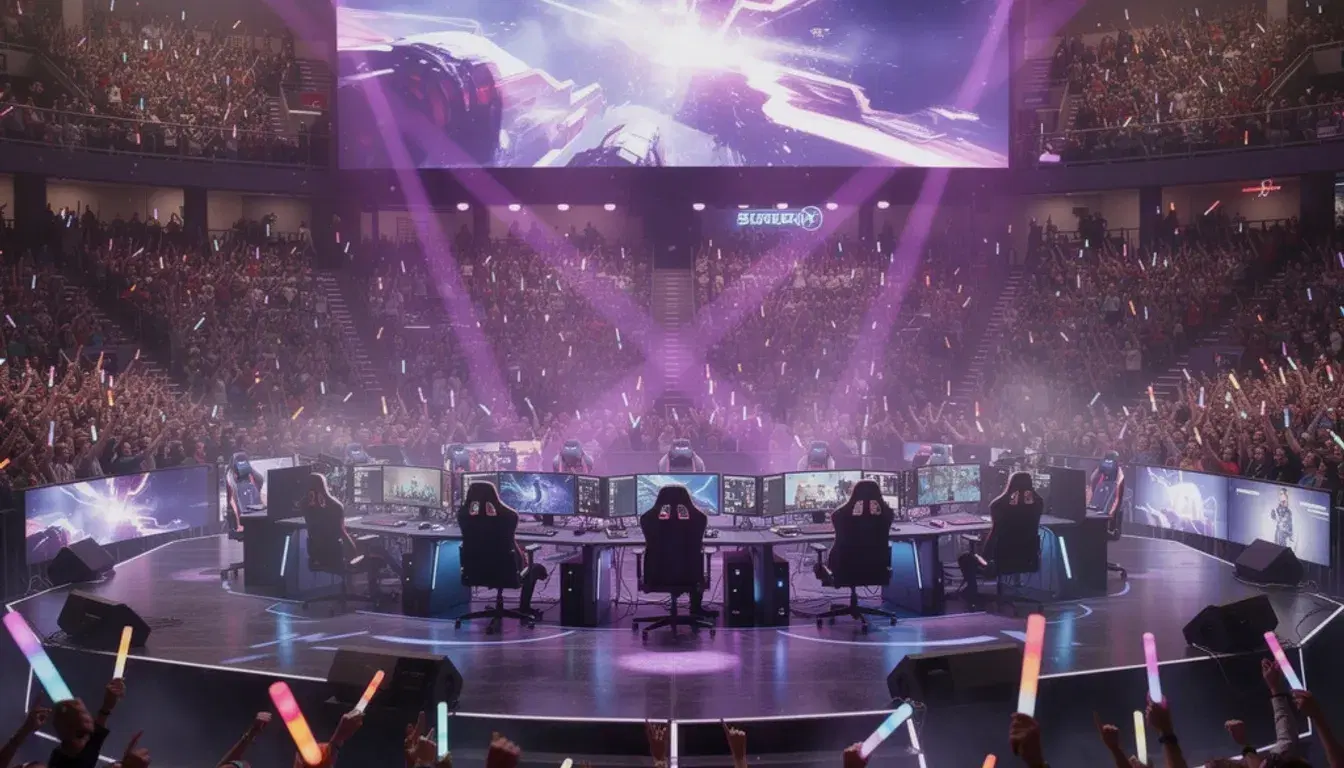
VLR.gg is the most-used VALORANT esports site, period. It is where stat junkies go for head-to-heads, where casuals go for the schedule, where casters pull research. We use it daily. But it has blind spots, and the alternatives in 2026 are stronger than they used to be.
This is an honest comparison of four sites that do specific things better than VLR, plus the cases where VLR is still the right default.
Where VLR.gg is genuinely best
Fairness first: VLR has the deepest VALORANT esports data on the open web. Every match has team stats, player stats, map veto history, agent picks, and a round-by-round breakdown. Their data team is fast; results post within minutes of a series ending. Match-detail pages are the gold standard.
If you want maximum depth on a single VALORANT match, VLR wins. The alternatives below are about what VLR doesn't do well.
1. Ascend: multi-title esports + mobile-first UI
Ascend covers VALORANT, CS2, and Dota 2 on a single esports surface, with schedules in your local timezone, live scores, and standings across regions. The mobile UI is purpose-built; VLR's mobile experience is a desktop site squeezed sideways, ours starts mobile-first.
What we don't do: per-match round-by-round breakdowns at VLR's depth. Our match-detail pages are leaner. If you want pure VALORANT depth, use VLR. If you want one schedule that covers VAL + CS2 + Dota and reads on a phone, use Ascend.
2. HLTV.org: Counter-Strike's equivalent of VLR
If you care about CS2 esports, HLTV is what VLR is to VALORANT. Match coverage, player rankings (the famous HLTV Top 30), team rankings, prize-money tracking. Their player rating system is the de facto standard CS2 metric, used by analyst desks during pro broadcasts.
HLTV doesn't cover VALORANT. The two sites live in separate ecosystems. If you follow both games, you maintain two tabs (or use a multi-title surface like Ascend).
3. Liquipedia: the VCT history book
Liquipedia is the wiki-style esports encyclopedia. Every VCT tournament from 2020 onward has a full page: bracket, results, prize pool, roster history per team, head-to-head archive. VLR covers the present; Liquipedia covers the past.
What it loses on: speed (community-edited wiki style, not real-time) and live match data (none; it is an archive). What it wins on: historical roster moves, prize-pool aggregation, tournament-format archaeology.
4. Esports Charts: viewership data
Esports Charts tracks live viewership across every major esports stream. If you want to know how many people actually watched the Heretics vs FNATIC grand final, this is where to look. Peak concurrent viewers, average viewers, total hours watched, language breakdown.
A niche use case, not useful for the schedule or stats, but the only place to find this data publicly.
Side-by-side: who to use for what
- Schedule for the next VCT match? VLR or Ascend (both fast).
- Schedule for VCT + CS2 + Dota in one place? Ascend.
- Deep round-by-round of a single VAL match? VLR. No equal.
- CS2 player rankings or HLTV rating? HLTV.
- Historical VCT bracket archive? Liquipedia.
- How many people watched the final? Esports Charts.
- Roster moves history? Liquipedia (depth) or VLR (recency).
- Mobile schedule lookup between matches? Ascend.
Multi-title is the structural gap
VLR.gg covers VALORANT only; that is the project's stated scope. CS2 lives on HLTV. Dota 2 lives on Liquipedia and DOTABUFF. LoL lives on op.gg and gol.gg. Anyone who wants a single schedule across multiple titles has to switch sites.
That is the gap Ascend's esports section is built around: the GRID feed that the leagues themselves run on, applied across VAL, CS2, and Dota 2 with schedules in your local timezone.
Frequently asked
What's the best alternative to vlr.gg?
It depends on what VLR doesn't do for you. For multi-title coverage (VAL + CS2 + Dota) and a mobile-first UI, Ascend. For CS2 specifically, HLTV. For historical archives, Liquipedia. For viewership data, Esports Charts. VLR remains best for pure VALORANT depth.
Is VLR.gg owned by Riot?
No. VLR is independent, built by a small team after the original VLR for League of Legends went dormant. Riot publishes some official data that VLR uses, but the site is not affiliated.
Why doesn't VLR cover CS2 or Dota 2?
Architectural. VLR's data models were built around VALORANT-specific structures (agent picks, map vetoes specific to VAL maps). Adding other titles would mean a ground-up rebuild. The team has stated they're staying VALORANT-focused.
Does Ascend replace VLR for VALORANT esports?
For VCT schedules, results, standings, and team pages, yes, with a faster mobile UI. For per-match deep dives (round-by-round, map veto history, exact player stats per round), VLR still has more depth. Use both if you want full coverage.